
Our approach
We did the research. You read the card.
PCIT. CBT. Attachment theory. Trauma-aware frameworks. Decades of work from people whose careers are this. Translated into the kind of script a parent can pick up at 7 AM and use without prep. No textbooks. No homework. Just the words you’d been trying to find.
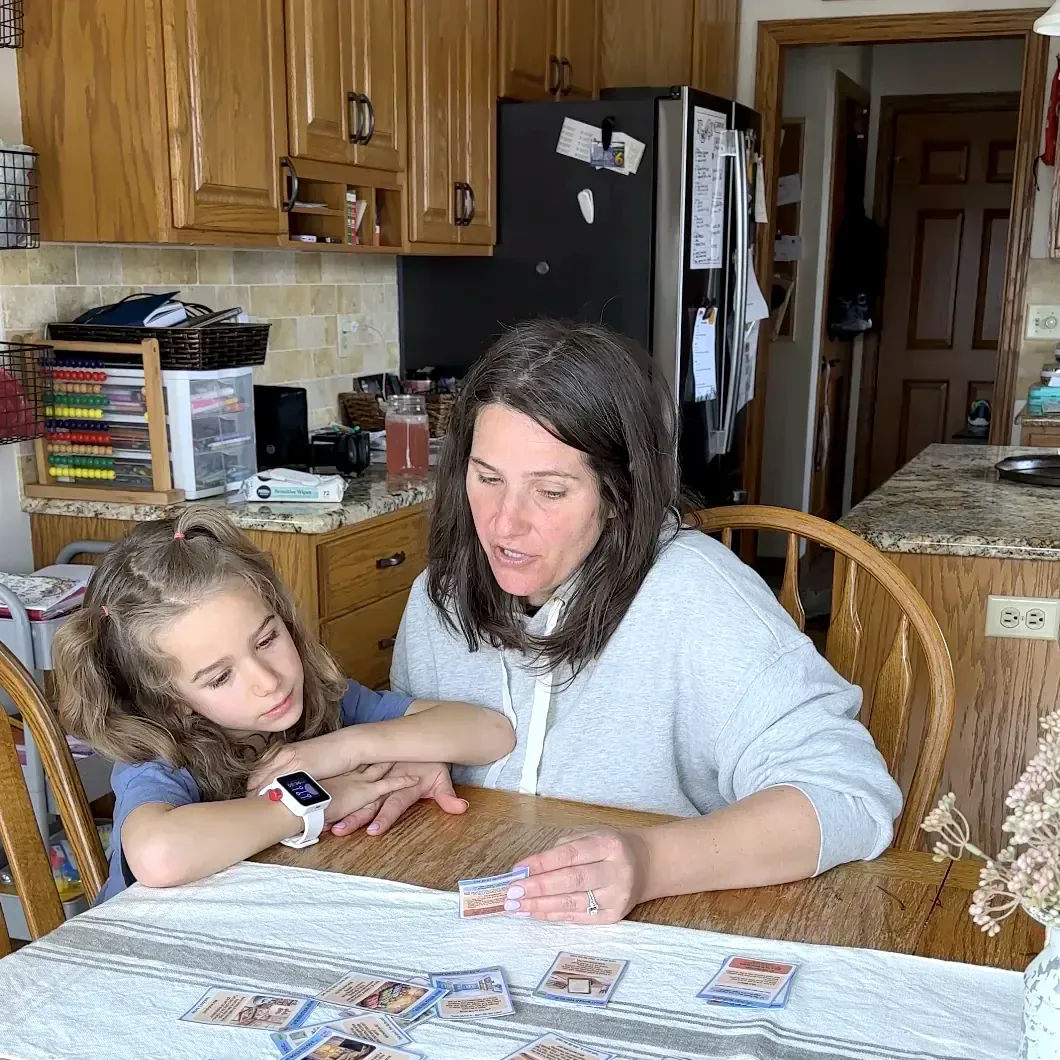
Two kinds of talks
Some talks happen at bedtime. Some happen mid-meltdown. We make both easy.
Different conversations need different methods. So we built two, one for the talks you can plan, one for the ones that show up uninvited.
Body Safety. Online Safety.
Method: The Safe & Sound Framework
The talks every kid needs that most parents freeze on. Planned. Calm. Five minutes at bedtime, with the script written word-for-word for your kid’s age.
- Read the card. The wording is already done.
- Age-segmented: 3-5, 6-8, 9-10. The version for your kid.
- Practice scenarios built in. Drills, not lectures.
- Built on PCIT and trauma-aware research.
Big Feelings.
Method: The CALM Method™
The 7:32 AM cereal meltdown. The after-school explosion. The bedtime wars. Four steps that work when everyone’s already losing it, including you.
- Grab your phone. Open the deck.
- Read one card out loud. That's it.
- Your kid does the action. About 90 seconds later, you're both on the way back to okay.
- Built on co-regulation + nervous system research.
When everything's falling apart
The CALM Method™
Built for the messy moments that actually matter. Tuesday morning when your kid's losing it over the wrong cereal and you're about to lose it right along with them.
C, Center yourself.
You can't pour calm from a chaotic cup.
Your kid feels every cell of your nervous system. Step one is finding your feet, even for ten seconds, before you try to lead anyone else back to okay.
A, Acknowledge what's happening.
Name it before you try to fix it.
For them, for you, for the whole messy moment. Sometimes “wow, this is really hard right now” changes the room more than any logic ever could.
L, Lead with connection.
Skip the lecture. Skip the logic.
Go straight to “I'm here with you.” When everyone's dysregulated, connection is the only thing that actually works. Logic comes later. Connection comes first.
M, Move forward together.
You don't have to fix it.
Just show up with something real and try again, together. Sometimes that's a deep breath. Sometimes a hug. Sometimes it's just not making it worse.
How it actually plays out at 7:32 AM.
No prep. No perfect conditions. Just the moment you’re actually in.
- 1You grab your phone (let's be real, it's already in your hand).
- 2Open whatever tool fits the moment.
- 3Read one simple thing out loud.
- 4Your kid does the action, stomp, breathe, squeeze, whatever.
- 5About 90 seconds later, you're both on the way back to okay.
When you can plan ahead
The Safe & Sound Framework.
For the talks every kid needs that most parents freeze on. Script-led. Age-segmented. Done in five minutes, at bedtime, on a Tuesday, in your pajamas.
Pick a Talk.
Body safety. Online safety. Big feelings. The conversation in front of you, not all the ones still ahead.
Open the first card.
Scripts written word-for-word for your kid's age, 3-5, 6-8, 9-10. You just read. We did the translation.
Have the conversation.
Your kid answers. You ask the next one. Five minutes later, a Talk you'd been avoiding for two years, finally done.
We’re not asking you to become a therapist. We’re handing you the script.
How we build
Four rules every Talk has to clear before we ship it.
The non-negotiables. The ones we won't bend, even when it would be easier and faster to just push the thing live.
Evidence-led, not vibes-led.
PCIT. CBT. Attachment theory. Trauma-aware frameworks. We translate the research into the kind of language a parent uses at 7 AM, not what you'd read in a textbook. If a card sounds clinical, it gets rewritten until it sounds like a person.
Age-calibrated, never one-size.
Every word is checked against developmental stage. The 3-5 script and the 9-10 script are different on purpose, what works for a four-year-old doesn't land at nine, and what lands at nine will scare a four-year-old. So we write each version for the kid it's actually for.
Read-from-the-card simple.
If a parent can't pick it up tonight at bedtime and use it without prep, we rewrite it. No homework. No “first, create a calm environment” nonsense. The script is the script. You read it. That's the whole job.
Kid-tested in the wild.
Every Talk pilots with actual kids in actual rooms before it ships. If kids don't engage, or worse, get scared, we kill the idea, even if it sounded great on paper. Real kids are the final review. Always.
Built for both
Made for families. Then the professionals asked for it too.
Big feelings and hard talks don't care if you're at home with one kid or in a classroom with thirty. Same scripts. Same methods. Different rooms.
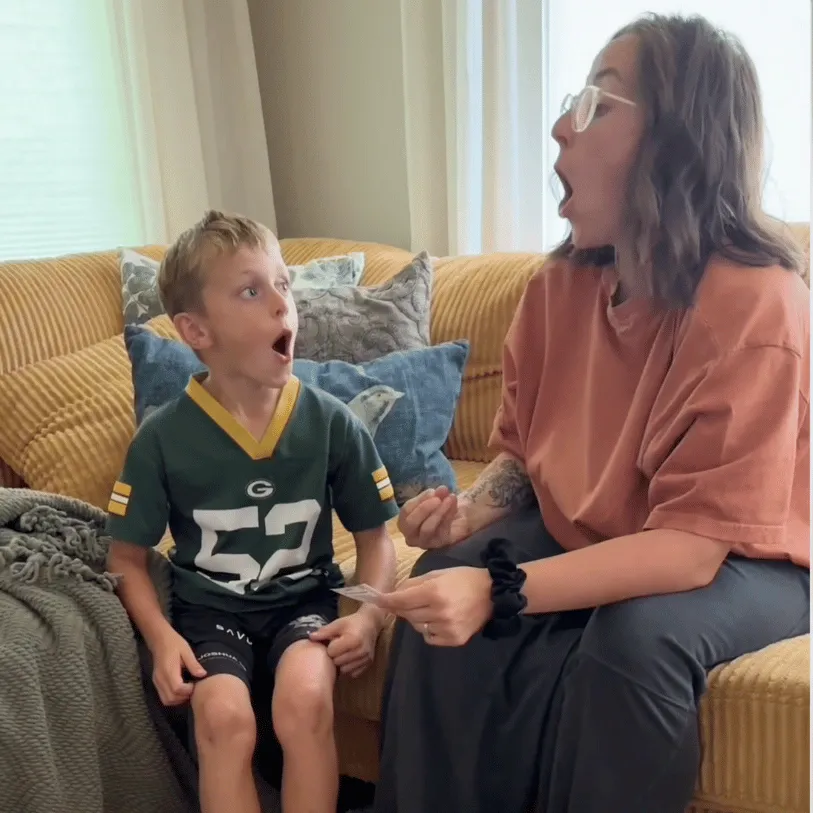
For parents
- Stop freezing on the talks every kid needs.
- Get the words you grew up without.
- Five minutes at bedtime, finally have the conversation.
- Connect with your kid instead of just surviving them.
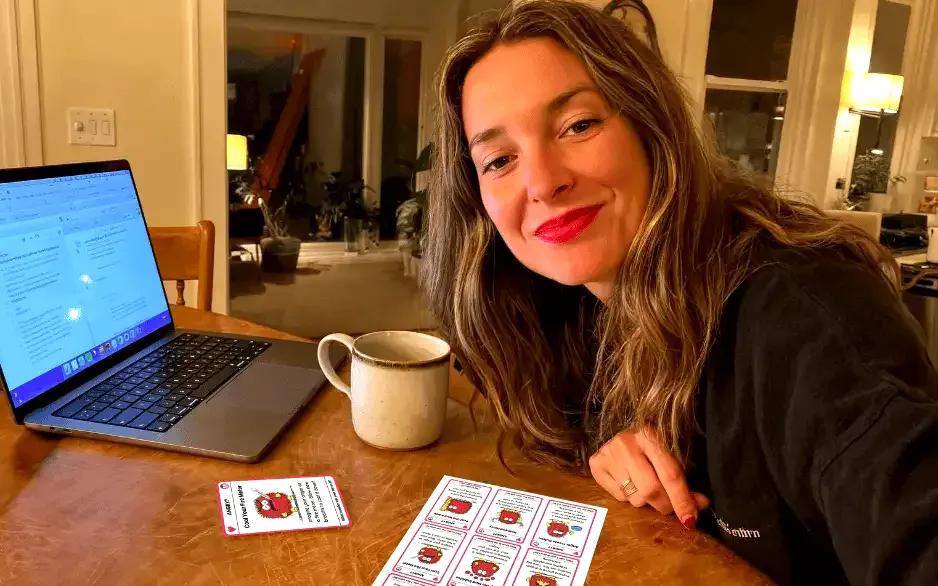
For professionals
- For teachers, counselors, clinicians, and youth and faith organizations.
- Run the Talks with the kids you serve. No prep, no training curve.
- Trauma-aware, evidence-based, actually fun for kids.
- Partner tools and pricing built for classrooms, practices, and programs.
What you're probably wondering
The questions parents ask before their first Talk.
We did the research so you don’t have to wing it.
Pick a Talk. Open the first card tonight. Five minutes. A conversation you’d been avoiding for two years, finally done.
Debbie
Debbie, Co-Founder, Trailies